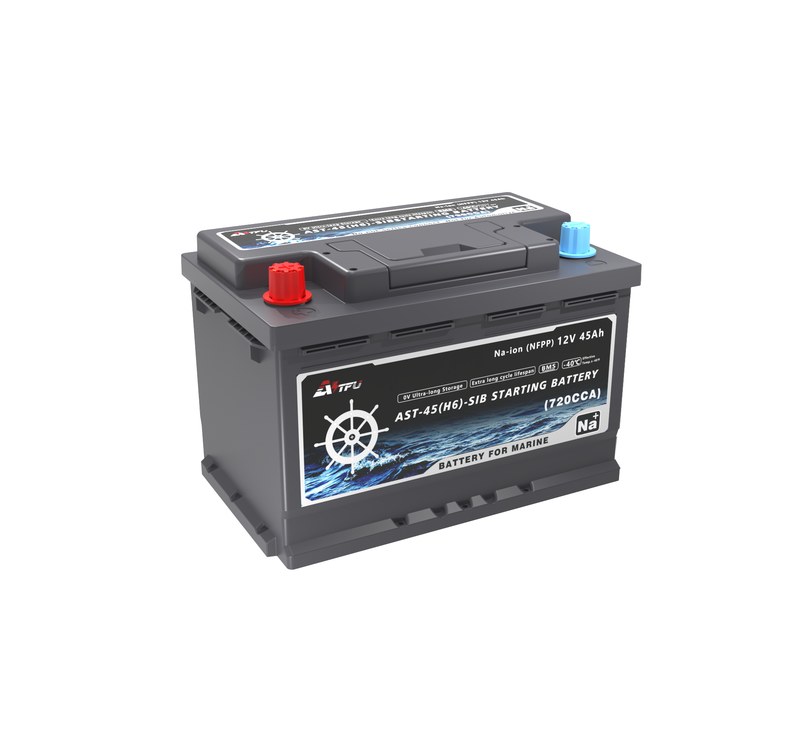
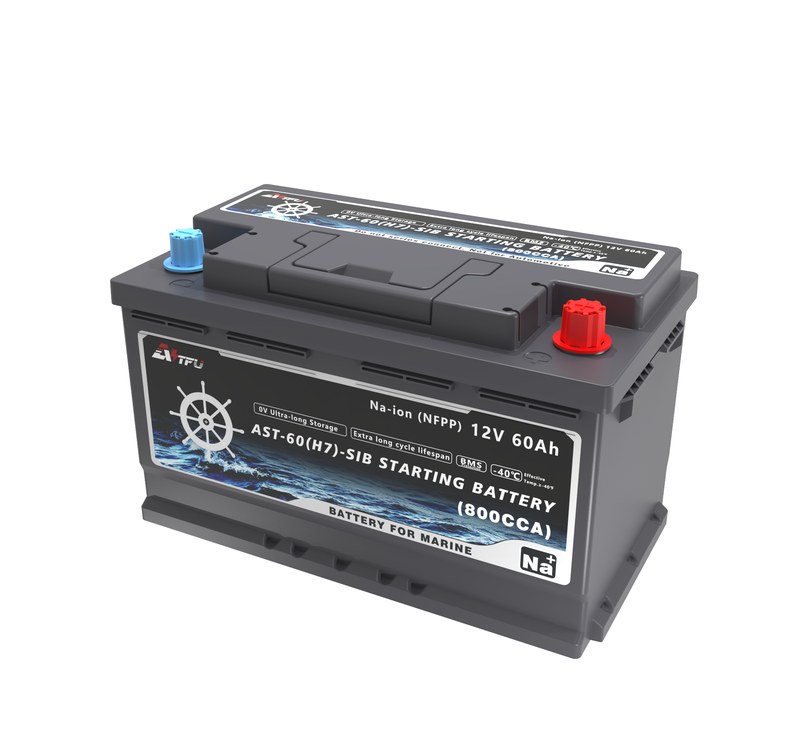
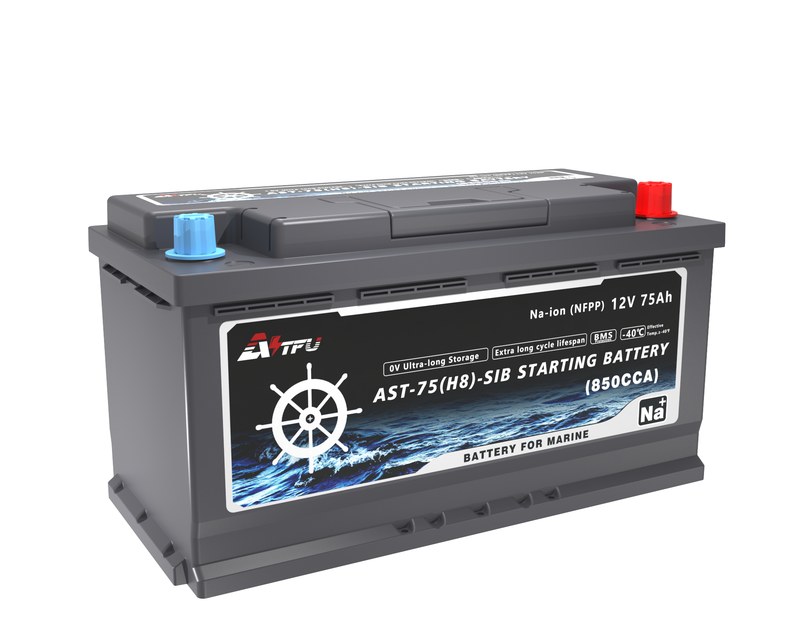
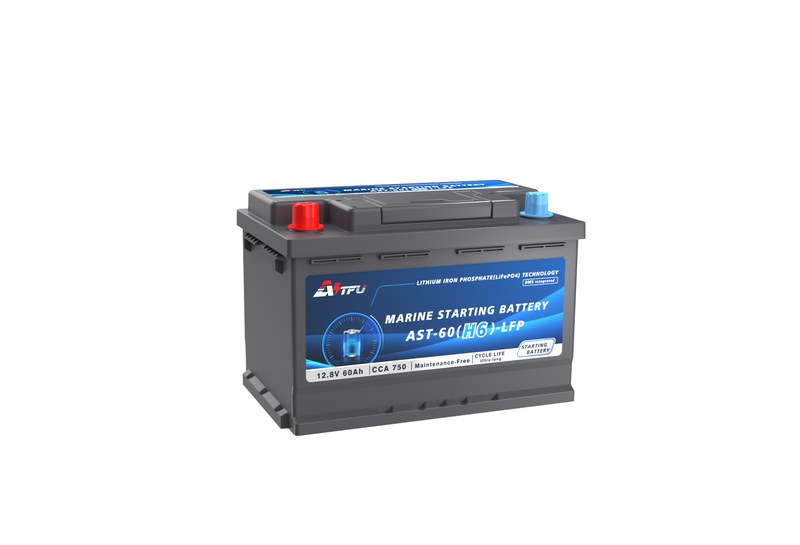
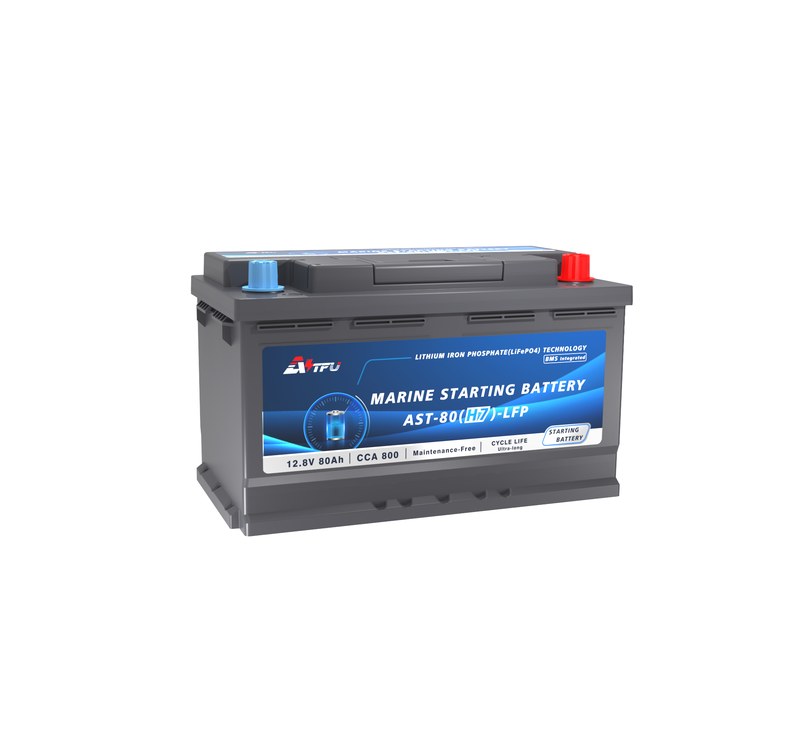
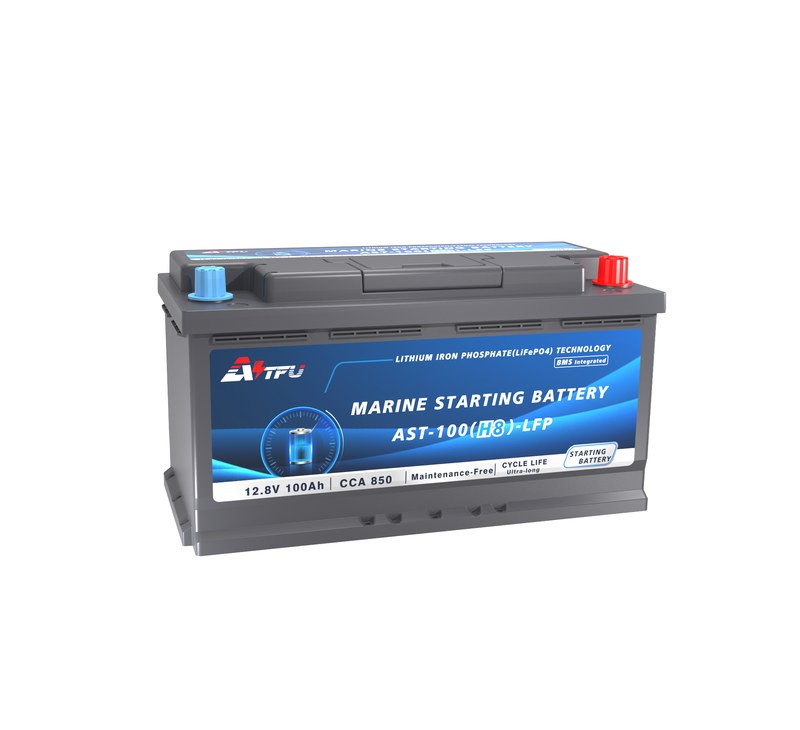
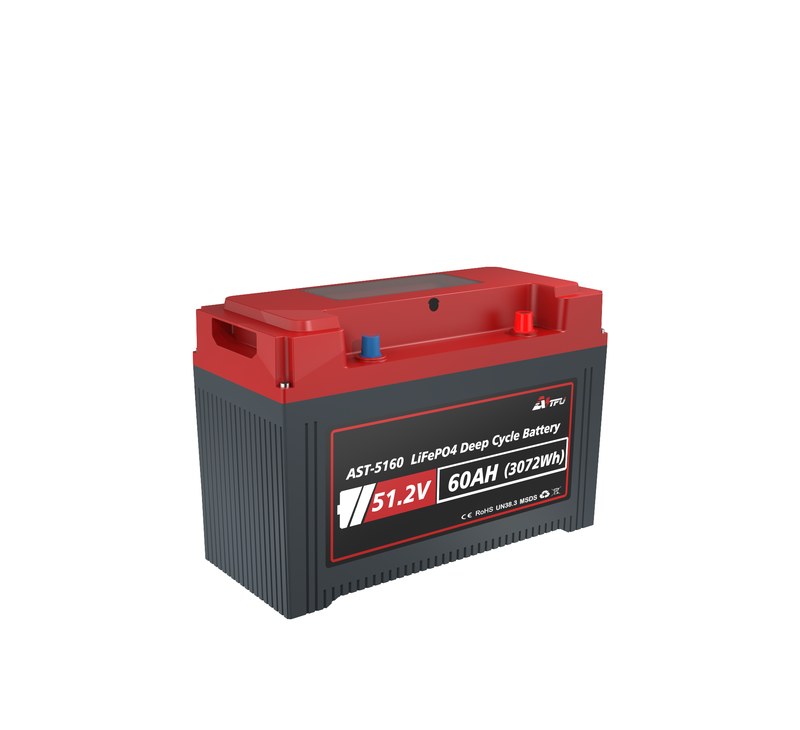
Sodium-ion (AST-45/60/75) and LiFePO4 (AST-60/80/100) starter packs in H5–H8, house banks for campervans and boats, plus 48 V golf cart packs. Integrated BMS.
Two chemistry families, one pack per case size: H5 to H8.
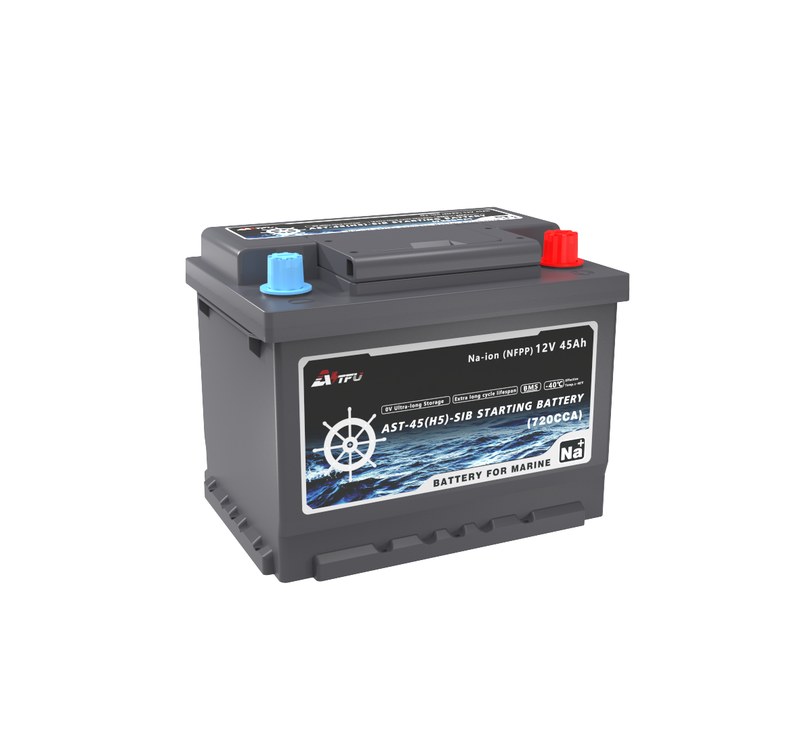
H5 → AST-45 H5 · H6 → AST-45 H6 · H7 → AST-60 · H8 → AST-75
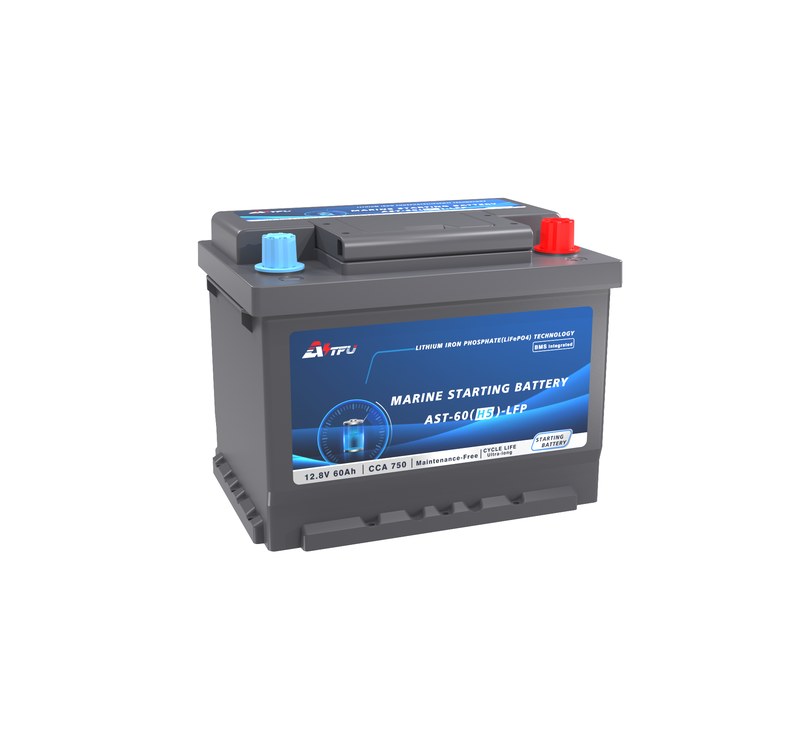
H5 → AST-60 LFP H5 · H6 → AST-60 LFP H6 · H7 → AST-80 · H8 → AST-100
Sodium-ion and LiFePO4 starter batteries both ship with a Bluetooth BMS. From the app you can watch the pack and decide how much capacity must always stay in reserve for starting.
State of charge, voltage, current and temperature on your phone — on sodium-ion and LiFePO4 alike.
Set a minimum remaining capacity and the BMS holds that slice back, so a long day at anchor cannot leave you without a start.
If the pack is nearly flat, one switch in the app releases the reserve to the starter motor — the engine cranks when you need it.
Self-discharge is low, so a boat or camper parked for a season — even a full year — keeps its reserve and still starts.
This is standard on all AST starter batteries: the reserve protects the start, the app gives it back when you need it.
Leisure boats run a few months and then stand still. A lead-acid starter left flat sulfates, loses capacity and will not crank in spring — often after only a season or two. Sodium-ion and LiFePO4 do not work that way.
Sodium-ion can sit fully discharged — even at 0 V — and comes back to full capacity after a normal charge.
Keeps cranking in low temperatures where lead-acid fades away.
Enough cold-cranking current for larger marine engines.
LiFePO4 self-discharge is low: no maintenance charging, ready to start in spring.
No watering, no trickle charging, no sulfation — it starts in spring.
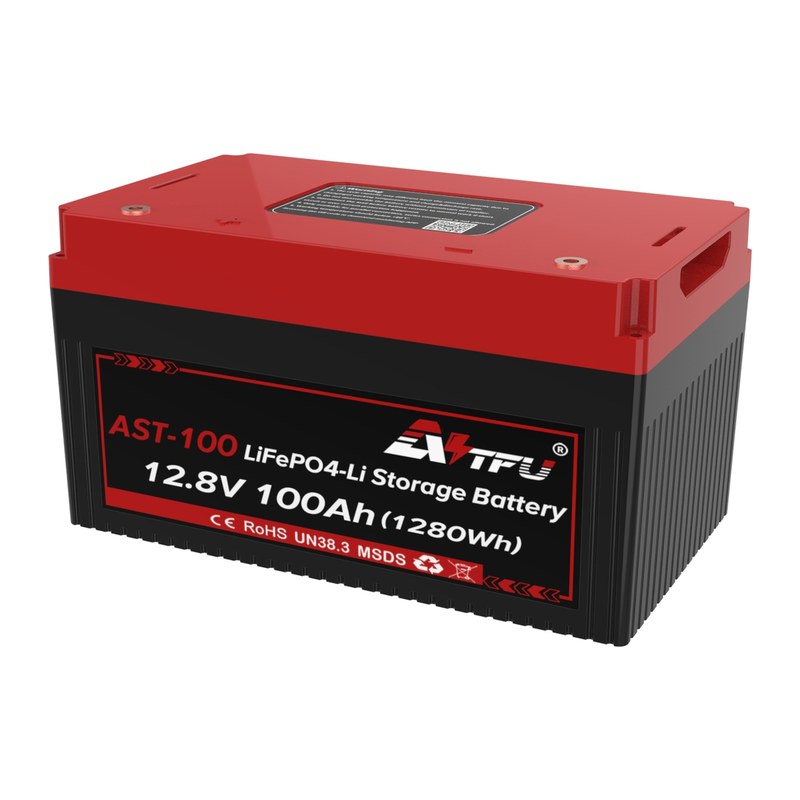
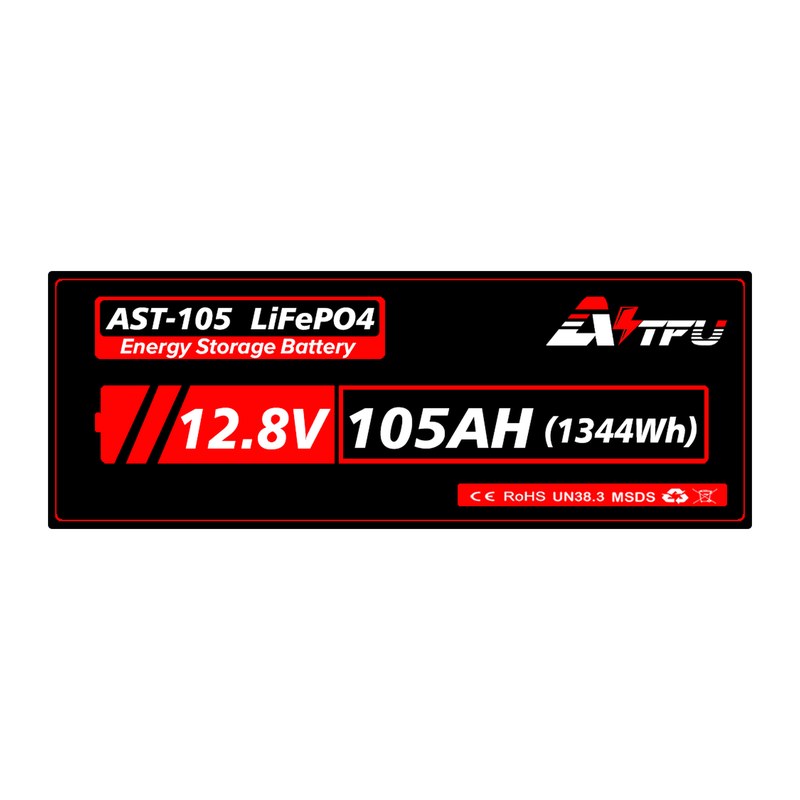
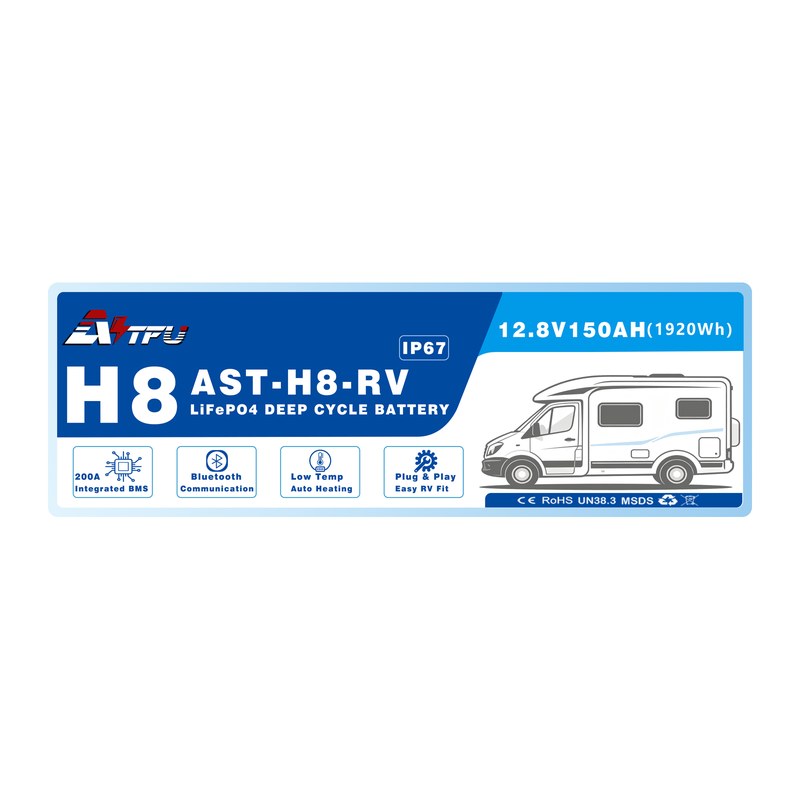
Deep-cycle packs, house banks and larger-format batteries, 12.8 V to 51.2 V, 30 Ah to 345 Ah.
Compact 12.8 V pack for tenders, small aux loads and tight lockers.
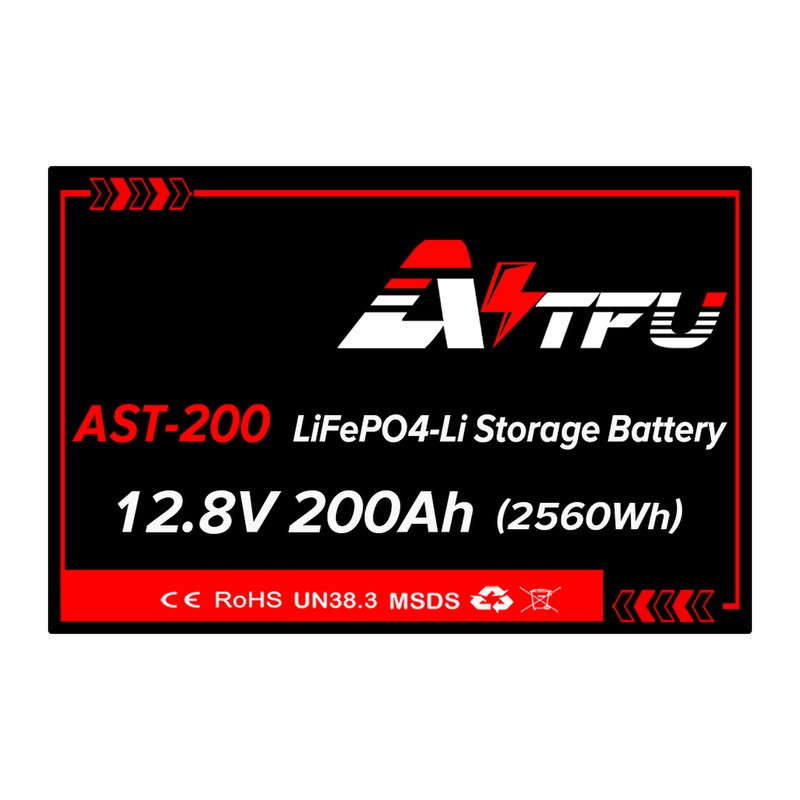
View model →Largest 12.8 V block in the range, for big banks and long autonomy.
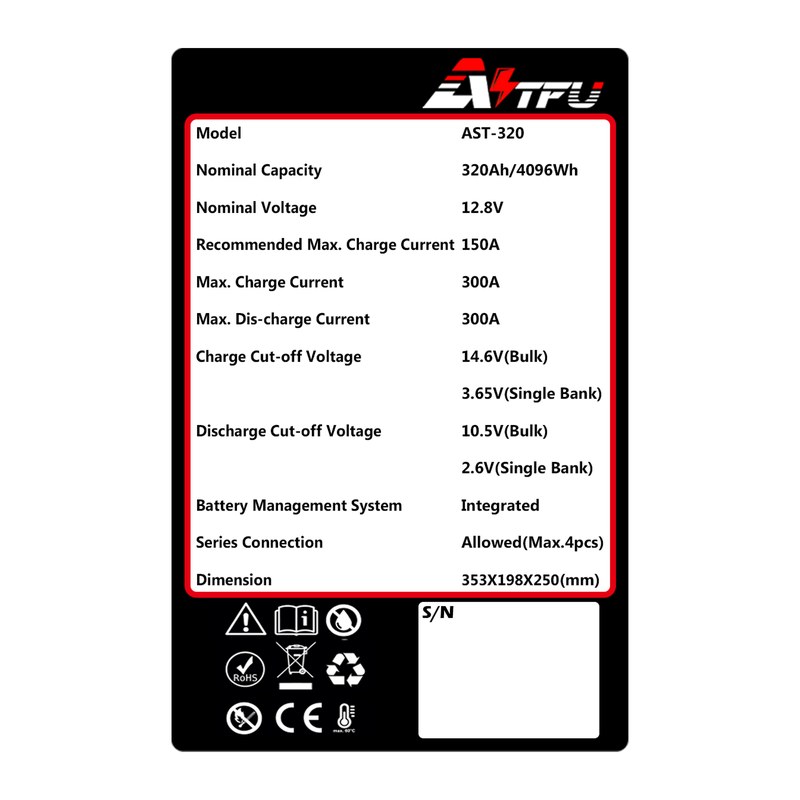
View model →Largest pack: full house bank replacement.
View model →The same LiFePO4 packs, specified for carts: 24 V and 48 V classes, sized to the bay and matched to your existing charger. Cart duty means short high-current pulls, then long idle — exactly where lead-acid fails.

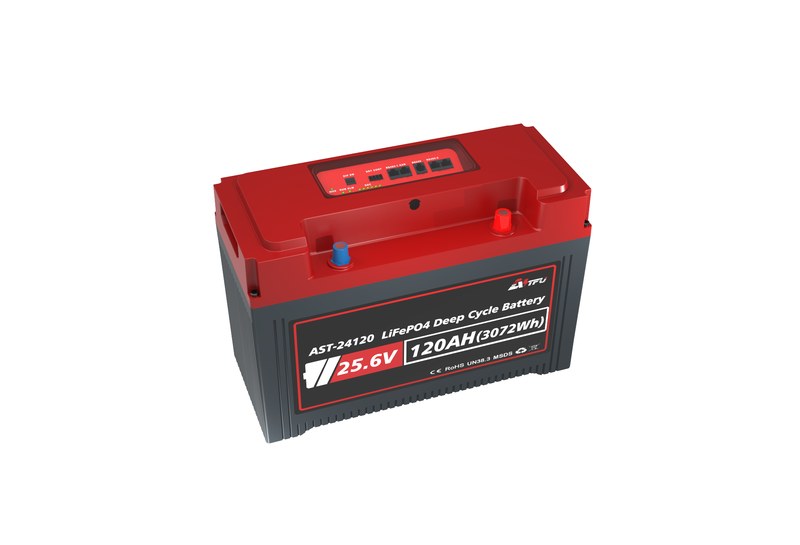
For 24 V class carts and utility vehicles: one pack replaces the lead-acid bank in the same bay, no watering, no sulphation after a winter in the shed.
View model →
For 48 V class carts: 51.2 V nominal, BMS and charge profile matched to the cart charger before shipping.
View model →Send the cart model, pack-bay dimensions and charger type — we confirm the matching pack.
Ask for your cart →Send your boat or van details and current battery setup — we recommend a model.